The Evolution of Market Research & CX in India: From Surveys to Behaviour Intelligence
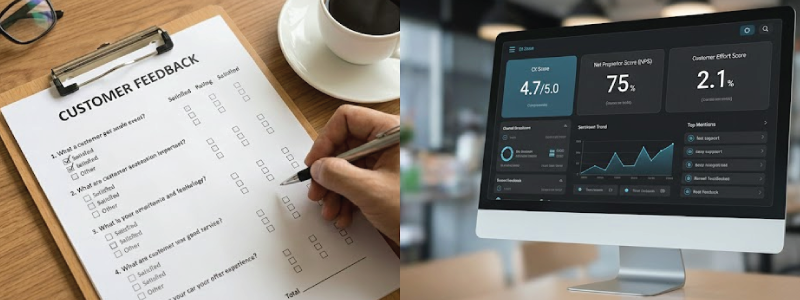
India’s market research and customer experience (CX) landscape has undergone a profound transformation over the past three decades. What began as clipboard surveys and telephonic interviews has evolved into AI-enabled platforms, real-time feedback loops, and predictive behaviour intelligence systems.
For CX leaders and market researchers in India, understanding this evolution is not just an academic exercise — it offers strategic insight into where the industry is headed next.
The Early Years: Traditional Market Research in India
In the 1990s and early 2000s, market research in India was largely synonymous with face-to-face surveys, focus group discussions, and CATI (Computer-Assisted Telephone Interviewing). Large enterprises relied heavily on syndicated research reports and periodic brand studies to guide strategy.
Data collection was:
- Manual and time-intensive
- Urban-centric
- Limited in frequency
- Often detached from real-time business decision-making
Customer feedback cycles were slow. A study might take months to design, execute, analyse, and report. By the time insights reached leadership teams, market conditions had already shifted.
Customer experience management as a formal discipline had not yet taken root. Feedback was reactive rather than proactive.
Liberalisation, Competition & the Birth of CX
Post-liberalisation and the rapid growth of sectors like telecom, banking, and retail fundamentally changed the landscape. Increased competition forced organisations to look beyond product and price toward customer retention and loyalty.
This period marked the early emergence of customer experience management in India. Companies began tracking metrics such as:
- Customer satisfaction (CSAT)
- Net Promoter Score (NPS)
- Brand perception studies
However, feedback mechanisms were still periodic and transactional. CX was often treated as a post-service measurement exercise rather than a strategic growth driver.
The focus was: “How did we perform?”
Not yet: “How do we predict and influence future behaviour?”
The Digital Revolution: Real-Time Feedback & CX Platforms
The proliferation of smartphones, affordable data plans, and digital payments in the 2010s accelerated a new era of digital market research in India. Businesses could now gather customer feedback through:
- SMS surveys
- App-based forms
- Email feedback systems
- In-store QR codes
Response cycles shortened dramatically. Real-time dashboards began replacing static PDF reports.
This shift coincided with the emergence of integrated CX platforms in India, enabling organisations to centralise feedback collection across touchpoints — online, offline, and hybrid.
Crucially, response rates became a strategic priority. With increasing digital fatigue, businesses realised that designing surveys for Indian audiences required:
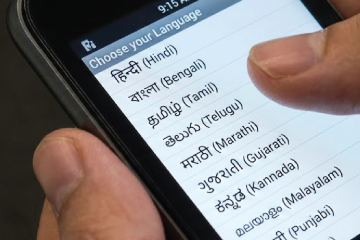
- Regional language support
- Mobile-first interfaces
- Shorter formats
- Context-aware timing
Accessibility and inclusivity moved to the forefront, especially as brands expanded into Tier 2 and Tier 3 markets.
The Indian Context: Why Market Research Had to Adapt
India presents a uniquely complex environment for customer research and experience management:
- Multiple languages and scripts
- Diverse literacy levels
- Urban–rural digital divides
- High mobile penetration but varying device capabilities
- Strong price sensitivity combined with rising aspiration
Global research frameworks often required localisation. Survey designs that worked in Western markets did not always translate effectively into Indian contexts.
For example:
- Long-form surveys reduced completion rates.
- English-only questionnaires limited accessibility.
- Incentive structures influenced response bias differently across segments.
As a result, improving survey response rates in India became as critical as the insights themselves.
Organisations began to recognise that CX success depended not only on data collection, but on culturally intelligent design.
From Measurement to Intelligence: The Rise of Behaviour Analytics
Today, we are witnessing the next phase: the integration of behaviour analytics in customer experience.
Modern CX strategy in India goes beyond asking customers what they think. It observes:
- Drop-off patterns
- Transaction frequency
- Channel switching behaviour
- Repeat purchase cycles
- Complaint escalation trends
By combining structured feedback (surveys) with unstructured data (interaction logs, sentiment analysis, digital behaviour), organisations are moving toward predictive CX models.
Instead of asking:
“Why did the customer churn?”
Businesses now ask:
“Which signals indicate churn risk before it happens?”
This shift marks the convergence of market research and operational intelligence.
The Present: Experience as a Competitive Advantage
In today’s environment, customer experience strategy in India is no longer confined to marketing teams. It intersects with:
- Operations
- Digital transformation
- Product design
- Compliance
- Risk management
CX leaders are expected to:
- Improve response rates
- Enhance accessibility
- Drive closed-loop action
- Link feedback to revenue and retention
This integration has elevated CX from a measurement function to a boardroom priority.
The modern mandate is clear: Make customer insight continuous, inclusive, and actionable.
The Future of Market Research & CX in India
Looking ahead, several trends will shape the next decade of CX innovation:
1. Hyper-Personalised Feedback Journeys
Surveys will become dynamic, adapting in real-time based on customer behaviour and history.
2. AI-Driven Insight Automation
Machine learning models will detect sentiment shifts and operational risks without manual intervention.
3. Regional Language Intelligence
With deeper penetration into non-metro markets, multilingual CX platforms will become standard rather than optional.
4. Accessibility as Strategy
Voice-enabled feedback, low-bandwidth optimisation, and simplified design will drive inclusivity.
5. Predictive & Prescriptive CX
Instead of static dashboards, systems will recommend actions to frontline teams based on behavioural signals.
The next phase of CX transformation in India will not be about collecting more data — it will be about designing smarter systems that connect behaviour, context, and decision-making in real time.
A Historical Inflection Point
When viewed historically, the journey is striking:
- 1990s: Data collection
- 2000s: Satisfaction measurement
- 2010s: Digital feedback integration
- 2020s: Behaviour intelligence and predictive CX
India’s market research industry has matured from episodic surveys to ecosystem-based intelligence platforms.
The organisations that will lead the future are those that understand this arc — and design their CX systems accordingly.
Market research is no longer a standalone function.
Customer experience is no longer a post-transaction activity.
Together, they form the strategic backbone of sustainable growth.
Ready to build a future-ready CX strategy for India? Connect with LitmusWorld for a consultation and demo.